“Our task areas aren’t strictly separate”
Oct. 2021Interprofessionality and coordinated care
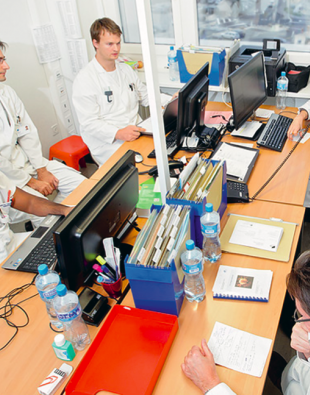
Five questions for Thomas Ihde, Chief Physician Psychiatry at Berner Oberländer Spitäler fmi AG. Different professions have been collaborating closely for more than ten years in the Department of Psychiatry in Interlaken. Tasks are allocated in accordance with the individual needs of the patients.
1. Mr. Ihde, how did interprofessional collaboration develop at your hospital in Interlaken?
When I started here in 2008, there were 14 people working in Psychiatry. Today we have 150 employees. The team includes not only doctors, psychologists, nurses, social workers and art and music therapists but also peer support workers. These are people who have already experienced mental health problems in their own lives – one of the things they do here is to ensure that we all have the patients’ perspective at the front of our minds at all times. These peers ensure that everyone in the team is always asking themselves one question: “What would I wish for in this situation?” To be understood is a large part of the answer.
2. Does the lack of psychiatrists in rural areas also play a role?
It can indeed be difficult to recruit doctors in the Bernese Oberland region, in spite of the wonderful view of the mountains. But we knew from the outset that we have a mandate to provide healthcare for the region and must carry it out. This is why we moved away from the traditional ideas of professions with clearly defined and distinct role models. We decide who performs which tasks in the course of treatment not on the basis of management hierarchies but by taking patients’ needs as the starting point. We provide person-centred services.
3. What does the person-centred approach look like?
Imagine you’ve been lying awake at night for weeks and at some point, you call our number. You’ll be talking to a member of our triage team. These people have different professional backgrounds, but one thing they all have in common is a great ability to listen. It won’t take them long to find out whether you need treatment and, if so, which type. If you are treated here, most of your care will be provided by a case leader who is part of our team. The case leader will involve other people as necessary. The case leader is the “conductor” who guides all the other people in the team, like in an orchestra.
4. What do you feel are the advantages of this type of fluid division of labour?
There is usually not much difference between the things a psychotherapist and a doctor do during treatment. The human aspect – the ability to establish a relationship – plays a much greater role than the professional aspect, which makes up maybe 20 per cent of the treatment. We usually consult doctors if the patient has physical health problems in addition to their mental health needs. If someone has damaged kidneys, for example, and needs dialysis, we have to look very carefully at which psychoactive drugs they can take. We don’t have a fixed range of tasks; we provide complementary expertise so that we can respond to the patient’s needs as well as possible. This leads almost automatically to cooperation on an equal footing. If care is organised differently for each case and indeed is changing all the time, the power dynamic tends to become a bit smoother. At the same time, though, there is no avoiding the fact that unfavourable dynamics and deprecation on a micro level do occur. Patients repeatedly reproach psychologists for “simply not being doctors”. And our current salary system unfortunately doesn’t do justice to the principle of equal pay for equal work.
5. What are the challenges posed by this division of labour?
In comparison with other sectors – finance and insurance, for example – people working in the healthcare system have a very conservative attitude. In healthcare you’ll come up against rejection or resistance much faster if you question time-honoured practices and try to change them. In addition, Switzerland lags far behind the English-speaking countries in terms of empowering the non-medical professions. The United Kingdom, for example, has long had “nurse practitioners”, in other words nurses with an expanded skill set, who can do things like listen to a patient’s lungs without the need for a doctor. Our fluid working model promotes adaptable all-round employees – and to some extent it allows us to ward off the general trend towards increasing professionalisation and specialisation in the healthcare system.
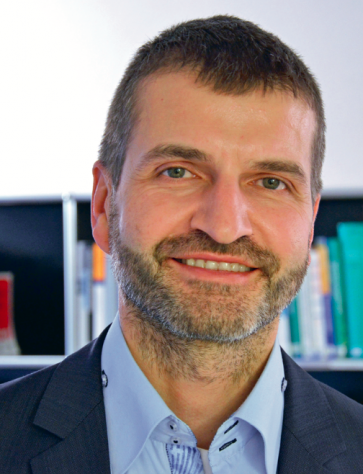
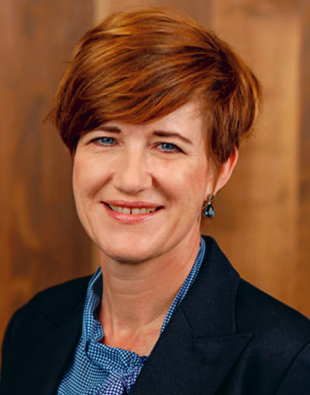
Dr. Thomas Ihde, Chief Physician Psychiatry at Spitäler fmi AG in Interlaken.
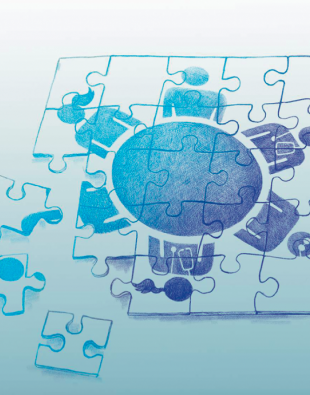
Illustration: telek.grafik
Contact
Dr. med. Thomas Ihde
thomas.ihde@spitalfmi.ch